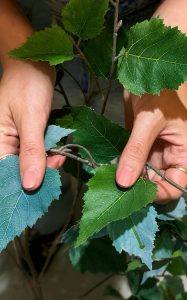
Preserved plants: can all plants be preserved?

Preserved plants are natural plants that have undergone a special preservation process. During this treatment, the natural sap is replaced with a plant-based preservative solution that allows them to maintain their fresh appearance, flexibility, and color for years, without the need for watering or natural light.
Thanks to this process, preserved plants have become an ideal solution for interior design projects, offices, commercial premises, and spaces where it is not possible to keep natural plants alive.
Preserved plants: why not all plants can be preserved
Not all plants can be preserved because the preservation process requires a specific plant structure. For a plant to properly absorb the preservative solution, its tissues must be porous, resistant, and flexible.
Species with stems that are too hard, extremely thin leaves, or very fragile structures do not respond well to the process. For this reason, only certain varieties are commonly used as preserved plants, ensuring a long-lasting, high-quality result.
Among the most common species of preserved plants are mosses, ferns, eucalyptus, hydrangeas, and other varieties specifically selected for this type of preservation.


Preserved plants: what they are and what they are not
One of the most common mistakes is to confuse preserved plants with dried plants. Although they may look similar, they are not the same.
Preserved plants are not dried plants. Dried plants are obtained through dehydration, which causes them to lose color, elasticity, and strength over time. Preserved plants, on the other hand, maintain a soft texture and natural appearance for years.
This difference is key in decorative projects where a natural, elegant, and durable finish is desired.
Advantages of using preserved plants in decoration
Preserved plants offer multiple advantages over natural or dried plants. They do not need maintenance, do not require water, and do not depend on natural light to maintain their appearance.
In addition, preserved plants allow nature to be integrated into indoor spaces in a sustainable way, reducing water consumption and eliminating maintenance tasks.
If you want to learn more about the advantages of using preserved plants in decorative projects, click here.
Frequently asked questions about preserved plants
- Can all plants be preserved?
No. Only certain species with specific characteristics are suitable for the process. - Are preserved plants natural?
Yes, they are natural plants that have been treated using a preservation process. - Do preserved plants need water?
No, they should not be watered under any circumstances. - Do they need natural light?
No, they can be placed in spaces without direct natural light. - How long do preserved plants last?
Under the right conditions, they can last between 5 and 10 years. - Where can preserved plants be used?
They are ideal for interiors, offices, hotels, stores, and homes. - Can preserved plants be touched?
Yes, but it is recommended to handle them with care. - Are they a sustainable option?
Yes, since they do not consume water or resources during maintenance.
If you would like to learn more about our approach and the use of preserved plants in decorative projects, please visit our articles.